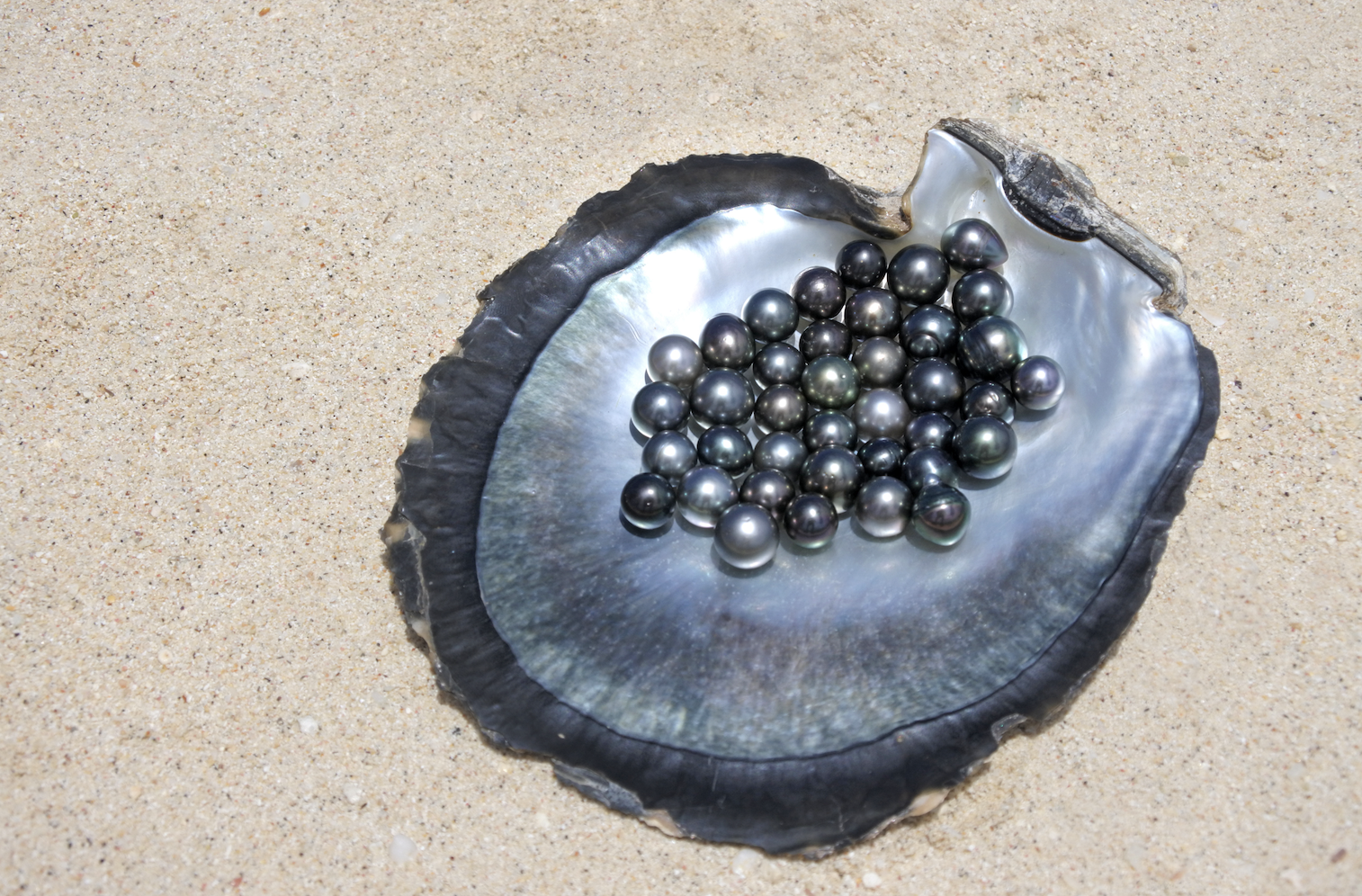
Inky, luminous, and subtly sophisticated. There’s a reason Tahitian “black pearls” are among the most sought-after additions to a jewelry box and a coveted memento of what may be the most exotic and romantic escape. Entire honeymoons are designed around visiting exotic lagoons, choosing an heirloom piece of jewelry and returning home with an iridescent miracle of nature in a velvet box.
A Pearl of a Gem
Unlike mineral gems, pearls are organic, marine miracles, created individually inside oysters. If an irritant, like a grain of sand, somehow ends up inside an oyster, to protect itself, the oyster coats the irritant with layers of nacre, slowly transforming it into something luminous and magically iridescent.
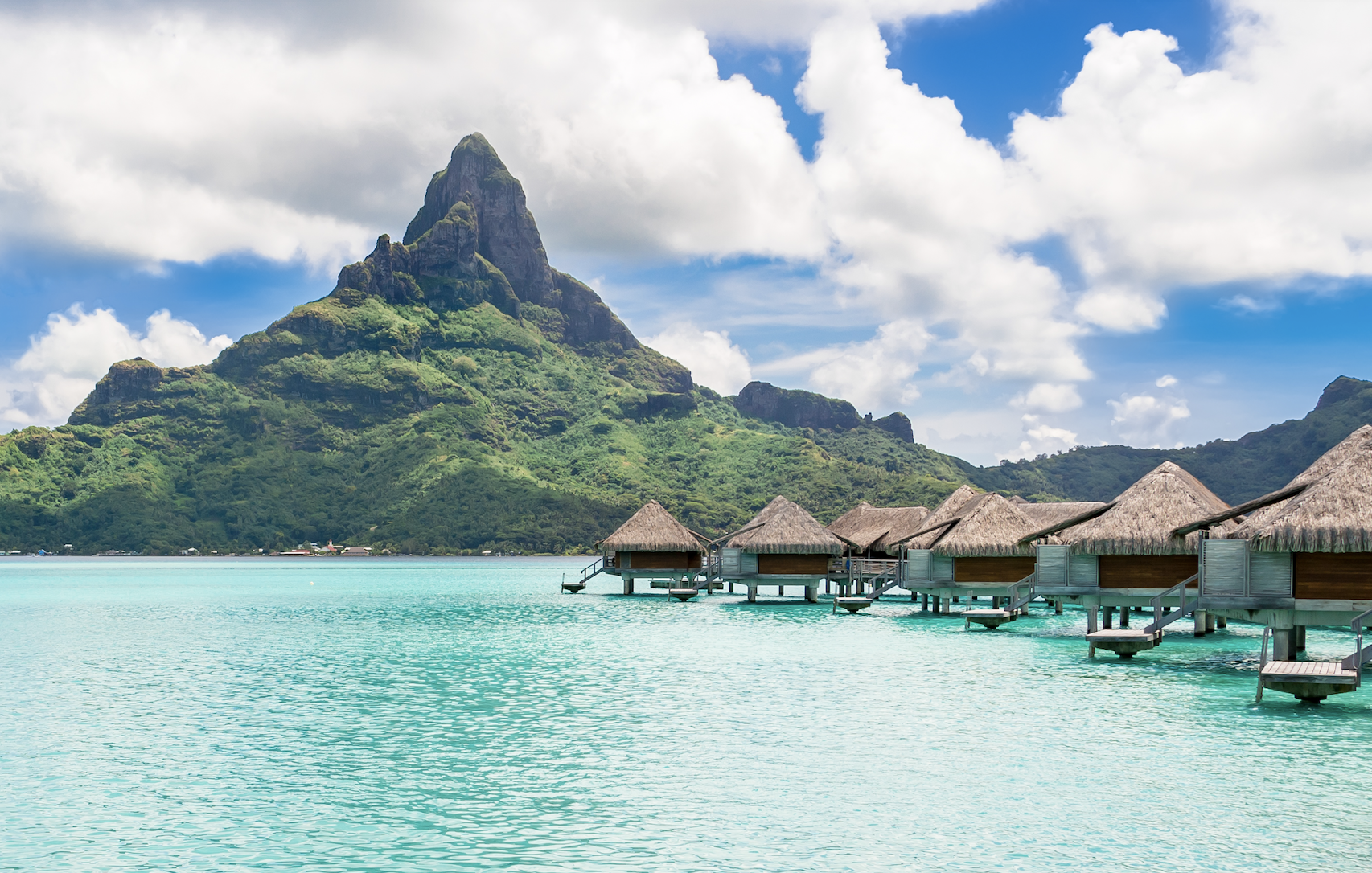
Tahitian pearls(often called “black pearls,” though they’re rarely pure black) come from the black-lip oyster, Pinctada margaritifera. These oysters thrive in the warm, pristine lagoons of islands such as Bora Bora, Rangiroa and Taha'a.
From Natural Treasure to Coveted Statement Piece
Long before the modern era of pearl cultivation, natural pearls were treasured throughout the Pacific, found rarely and randomly in wild oysters harvested for food.
European explorers arriving in the 18th and 19th centuries quickly recognized their value. By the early 20th century, overharvesting wild oysters nearly depleted local populations.
The turning point came in the 1960s and ’70s, when Japanese pearl cultivation techniques were successfully adapted for local oysters. Pearl farming became a cornerstone industry across the Tuamotu and Gambier archipelagos. Today, Tahitian pearls are one of French Polynesia’s most important exports—and one of its most elegant ambassadors.
Their value lies in three things: rarity, size, and color.
Tahitian pearls are saltwater cultured, often larger than other types of pearls, displaying natural dark body colors with luminous overtones: peacock green, aubergine, silver, blue, even hints of rose. That depth of color is not chemical dyes; it’s biology and environment working together.
In an era of mass-produced mementos, Tahitian pearls remain natural, deeply tied to place, and a true heirloom treasure.
5 Tips for Shopping for Tahitian Pearls in French Polynesia
As a symbol of love, elegance and travel sophistication, pearls are investments you want to cherish for a lifetime and pass along as heirlooms. You want to shop wisely.
Walk through Papeete’s municipal market, browse high-end boutiques in Bora Bora, or visit a working pearl farm on Rangiroa, and you’ll see the range—from simple single-pearl pendants perfect for daily wear to dramatic strands worthy of black-tie evenings back home.
1. Grading basics
Four factors matter most:
- Luster (the glow): The sharper and brighter the reflection, the more valuable the pearl.
- Surface quality: Fewer visible blemishes generally mean higher value.
- Shape: A perfectly round shape is rare and most expensive. Near-round and baroque shapes can offer excellent value.
- Size: Larger pearls command higher prices—but only if luster and surface are strong.
Experts suggest that if you must prioritize one thing, prioritize luster. A slightly smaller pearl with exceptional glow will outshine a larger dull one.
2. Black is the new black… or is it?
True Tahitian pearls display natural dark body colors with complex overtones. If a pearl looks flat, jet-black, and inexpensive, it may be dyed freshwater. Ask directly: Is the color natural? Reputable jewelers will say yes—and put it on your receipt.
3. Look at the drill hole
Ask to see the pearl closely. Around the drill hole, color should be consistent. Heavy dye often pools at the edges in treated pearls (less common in certified Tahitian pieces, but still worth checking).
4. Compare in natural light
Boutique lighting flatters everything. Step near a window. The pearl should still glow, not look chalky.
5. Ask for documentation
French Polynesia has strict export regulations for Tahitian pearls. Your purchase should come with:
- A detailed receipt listing pearl type and size
- Disclosure of any treatments (Tahitian pearls are generally not dyed)
- Certification for buying higher-value pieces
Are they worth the price?
Tahitian pearls are among the most valuable cultured pearls in the world because of their rarity, natural dark colors, and the time required to grow them—often 18 to 24 months.
Prices can range from a few hundred dollars for a modest pendant to several thousand for exceptional, round, high-luster pieces. The key question is not just price—it’s whether the pearl has strong luster, pleasing color, and craftsmanship to match.
If it does, you’re not just buying jewelry. You’re buying a natural, marine treasure.
Perhaps that’s why Tahiti's “black” pearls endure as Polynesia’s most meaningful souvenir: subtle, luminous, and forever linked to water, time, and your memories of the lagoons and shifting tides of your trip to a once-in-a-lifetime destination steeped in romance.
START YOUR TRIP!
By: Lynn Elmhirst, cruise/travel journalist
Images: Getty
All rights reserved. You are welcome to share this material from this page, but it may not be copied, re-published, broadcast, rewritten or redistributed.
Sign up for our Newsletter
You should see:
Fall Fam Jam at Beaches Resorts: Free Night’s Stay and More for Families
Make fall family time at Beaches Resorts’! The all-inclus... more

Kensington Tours, Ancestry.com’s Private Personal Heritage Journeys Connect Travelers to their Roots
Searching for your family heritage in the lands where you... more
“Modular” Itineraries from Riverside Luxury Cruises Allow you to Build Your Best Trip
Rather than sticking to the classic, week or 10-day river... more

Riverside Luxury Cruises’ Early Booking Bonus: up to 18% Discount
For a limited time, Riverside Luxury Cruises offers doubl... more
Take Your Winter Vacation to New Levels of Luxury at Aman Resorts
Don’t just escape winter – discover vibrant city sanctuar... more

Spain’s Most Luxurious Train’s New Madrid-Seville Weeklong Journey
Spain’s historic Al Andalus train, described as one of th... more
Popular Posts
- Top 10 Reasons to Travel to Croatia
- Video: Is this the 'Most Luxurious Ship at Sea'?
- Now More Than Ever: Why You Should Work With A Travel Advisor
- All-New Luxury Travel Concept Design Details Revealed: Crystal AirCruises Jet
- Three European River Cruises You May Never Have Heard Of
- Re-Visiting Jamaica